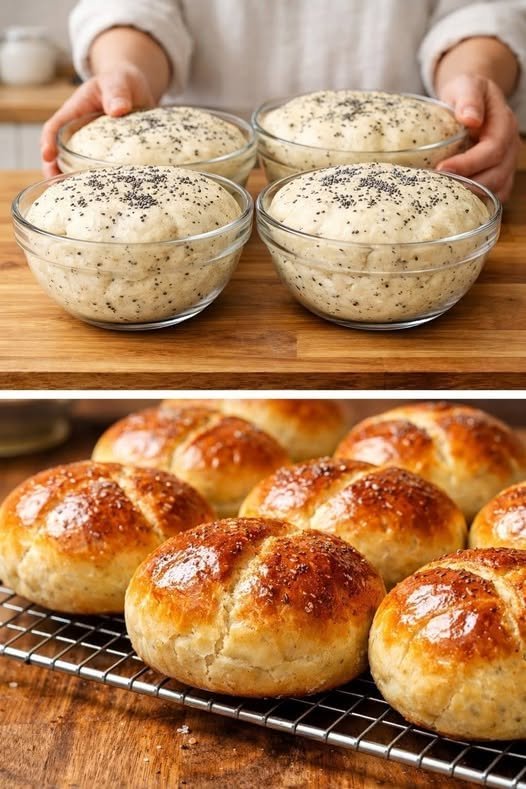
Soft bread rolls are one of the most versatile baked goods you can make at home. They are perfect for breakfast, sandwiches, burgers, dinner rolls, or simply enjoyed warm with butter and jam. The secret to soft, fluffy rolls lies in proper kneading, allowing enough time for the dough to rise, and baking them just until golden. This detailed recipe will help you make delicious bakery-style bread rolls with a light texture and rich flavor.
Ingredients
For the Dough
- 500 g bread flour (or all-purpose flour)
- 10 g instant yeast (2 teaspoons)
- 50 g granulated sugar (¼ cup)
- 8 g salt (1½ teaspoons)
- 250 ml warm milk (about 40°C/105°F)
- 1 large egg
- 60 g unsalted butter, softened
- 2 tablespoons vegetable oil
For Brushing
- 1 egg beaten with 1 tablespoon milk (egg wash)
- 2 tablespoons melted butter (after baking)
Equipment Needed
- Large mixing bowl
- Measuring cups and spoons
- Kitchen scale (recommended)
- Dough scraper
- Baking tray
- Parchment paper
- Pastry brush
- Clean kitchen towel or plastic wrap
- Oven
Step 1: Prepare the Ingredients
Measure all ingredients before starting. Warm the milk until it is slightly warm, not hot. If the milk is too hot, it may kill the yeast. Softened butter should be at room temperature so it mixes easily into the dough.
Using bread flour gives the rolls a slightly chewier texture and better rise, but all-purpose flour also works well.
Step 2: Mix the Dough
In a large mixing bowl combine:
- Flour
- Sugar
- Instant yeast
- Salt
Mix the dry ingredients thoroughly.
Add:
- Warm milk
- Egg
- Vegetable oil
Mix until the flour is hydrated and forms a rough dough.
Now add the softened butter.
Continue mixing until the butter is fully incorporated.
Step 3: Knead the Dough
Transfer the dough onto a lightly floured surface.
Knead for about 10–12 minutes by hand.
If using a stand mixer, knead for 8–10 minutes on medium speed.
The dough should become:
- Smooth
- Soft
- Elastic
- Slightly tacky but not sticky
A properly kneaded dough will stretch into a thin windowpane without tearing easily.
Step 4: First Rise
Place the dough into a lightly oiled bowl.
Turn it once so both sides are coated.
Cover with:
- Plastic wrap
- Damp towel
Let rise in a warm place for 60–90 minutes.
The dough should double in size.
Step 5: Punch Down the Dough
Once doubled, gently press down the dough to release excess air.
Avoid punching aggressively because this can damage the gluten structure.
Transfer the dough to the work surface.
Step 6: Divide the Dough
Weigh the dough.
Divide into equal portions.
Each roll should weigh approximately:
- 60–70 grams for dinner rolls
- 80–100 grams for sandwich rolls
Equal-sized pieces ensure even baking.
Step 7: Shape the Rolls
Flatten each dough piece slightly.
Fold the edges toward the center.
Turn it upside down.
Cup your hand over the dough and roll it against the counter until smooth.
Repeat for every piece.
The smoother the surface, the better the final appearance.
Step 8: Arrange on Baking Tray
Line a baking tray with parchment paper.
Arrange the dough balls with small gaps between them.
Leave enough room for expansion.
If you want pull-apart dinner rolls, place them closer together.
For individual sandwich rolls, leave more space.
Step 9: Second Rise
Cover the shaped rolls loosely.
Allow them to rise for another 40–60 minutes.
They should become noticeably larger and puffy.
Proper proofing creates lighter, softer bread.
Step 10: Apply Egg Wash
Beat:
- 1 egg
- 1 tablespoon milk
Brush gently over the rolls.
This gives a beautiful shiny golden crust.
Avoid pressing too hard so the dough doesn’t deflate.
Step 11: Bake
Preheat oven to 180°C (350°F).
Bake for 18–22 minutes.
The rolls should become:
- Golden brown
- Lightly crisp outside
- Soft inside
The internal temperature should reach about 93°C (200°F) if using a thermometer.
Step 12: Brush with Butter
Immediately after removing from the oven, brush the tops with melted butter.
This keeps the crust soft and adds extra flavor.
Cover lightly with a clean towel for 10 minutes while cooling.
Serving Suggestions
These bread rolls are delicious served with:
- Butter
- Strawberry jam
- Honey
- Peanut butter
- Cheese
- Chicken sandwiches
- Burgers
- Soup
- Curry
- Scrambled eggs
Storage Instructions
Store cooled rolls in an airtight container.
- Room temperature: 3 days
- Refrigerator: 1 week
- Freezer: Up to 3 months
To reheat, warm in a 160°C (320°F) oven for 5–8 minutes, or microwave for 10–15 seconds.
Tips for Perfect Soft Bread Rolls
- Use fresh yeast for the best rise.
- Warm milk should feel warm, not hot.
- Knead thoroughly to develop gluten.
- Don’t add too much extra flour.
- Allow both rises to complete fully.
- Bake only until golden to avoid drying out the rolls.
- Brush with butter immediately after baking.
- Use bread flour for the softest texture.
- Measure ingredients accurately, preferably by weight.
- Let the rolls cool slightly before slicing.
Common Mistakes to Avoid
- Using milk that is too hot, which can kill the yeast.
- Adding excessive flour, resulting in dense rolls.
- Skipping kneading, leading to poor texture.
- Under-proofing, which produces heavy rolls.
- Over-proofing, causing the dough to collapse.
- Baking too long, making the rolls dry.
- Forgetting to brush with butter after baking.
Variations
You can customize this recipe in many ways:
- Sprinkle sesame or poppy seeds on top before baking.
- Add grated cheddar cheese to the dough.
- Mix in herbs such as oregano, parsley, or rosemary.
- Fill each roll with cheese before shaping.
- Make sweet rolls by adding raisins, cinnamon, or chocolate chips.
- Shape the dough into hot dog buns, burger buns, or pull-apart rolls.
Frequently Asked Questions
Can I make the dough ahead of time?
Yes. After kneading, refrigerate the dough overnight. The next day, let it come to room temperature, shape the rolls, proof, and bake.
Can I use water instead of milk?
Yes, but milk produces softer, richer rolls with better flavor.
Why are my rolls dense?
Dense rolls are usually caused by insufficient kneading, expired yeast, or not allowing enough proofing time.
Can I freeze baked rolls?
Yes. Cool them completely, wrap well, and freeze for up to three months. Thaw at room temperature and warm before serving.
Can I use whole wheat flour?
Yes, but replacing all the white flour with whole wheat will make the rolls denser. For softer results, use half whole wheat and half bread flour.
Final Notes
These soft bread rolls are ideal for everyday baking because they use simple ingredients while producing bakery-quality results. The combination of milk, butter, egg, and careful kneading creates a tender crumb and a rich flavor. By giving the dough enough time to rise and baking it just until golden, you’ll achieve rolls that are fluffy, moist, and delicious. Whether served with breakfast, used for sandwiches, or enjoyed fresh from the oven with butter, these homemade bread rolls are sure to become a favorite recipe in your kitchen.
