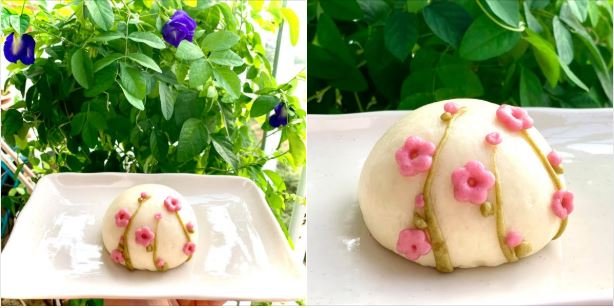

Have you ever wondered if you can make beautiful, soft steamed buns using only sourdough starter instead of commercial yeast? The answer is yes! These homemade Sourdough Steamed Buns are a wonderful way to explore traditional steaming techniques while using your sourdough starter.
Steamed buns are loved for their soft, pillowy texture and delicate appearance. Unlike baked bread, these buns are cooked over steam, giving them a smooth exterior and a tender, fluffy interior.
This recipe uses an active sourdough levain as the only leavening agent. There is no commercial yeast involved. The natural fermentation process helps the dough develop its structure and flavor while creating beautifully soft buns.
One of the nicest things about this recipe is that you can shape the dough into simple round buns or decorate them with small handmade flowers and leaves. Pink flower decorations and delicate green details make them especially beautiful for family gatherings, afternoon tea, or special occasions.
You can also make these buns plain or add a sweet filling such as red bean paste, depending on your preference.
If you already maintain a sourdough starter, this is a lovely recipe to add to your collection. It takes some patience because natural fermentation works more slowly than commercial yeast, but the result is worth the effort.
Why You Will Love These Sourdough Steamed Buns
- No commercial yeast: The recipe relies entirely on an active sourdough levain.
- Soft and fluffy texture: Steaming creates a delicate, tender crumb.
- Beautiful presentation: The dough can be shaped and decorated with handmade flowers.
- Simple ingredients: Flour, water, sourdough starter, sugar, and a few basic pantry ingredients.
- Customizable: Make plain buns, sweet buns, or filled varieties.
- Great for sourdough bakers: A creative way to use your active starter.
Preparation Time and Servings
| Details | Time |
|---|---|
| Preparation time | 30 minutes |
| Levain preparation | 4–8 hours |
| First fermentation | 3–5 hours |
| Final proofing | 1–3 hours |
| Steaming time | 12–15 minutes |
| Total time | Approximately 9–16 hours |
| Servings | 8 buns |
| Difficulty | Moderate |
Fermentation times are estimates and depend on starter strength, room temperature, and dough activity.
Ingredients for Sourdough Steamed Buns
These quantities make approximately eight medium-sized steamed buns.
For the Levain
- 20 g active sourdough starter
- 60 g all-purpose flour
- 60 g lukewarm water
For the Main Dough
- 300 g all-purpose flour
- 80 g prepared active levain
- 125 ml lukewarm water
- 35 g granulated sugar
- 15 g neutral vegetable oil
- ¼ teaspoon salt
For the Decorative Flower Dough
- 40 g all-purpose flour
- 20 ml water
- A tiny amount of pink food coloring
- A tiny amount of green food coloring
Optional Filling
- 120 g sweetened red bean paste
You can also leave the buns plain if you prefer a simple steamed bread.
How to Make Sourdough Steamed Buns
Step 1: Prepare the Sourdough Levain
Start by preparing your levain.
In a small mixing bowl, combine the active sourdough starter, flour, and lukewarm water.
Mix until a thick, smooth paste forms.
Cover the bowl loosely and leave it at room temperature for approximately 4–8 hours, depending on your starter’s activity and room temperature.
The levain should become bubbly, expanded, and noticeably active before using it.
A strong, active levain is especially important because this recipe does not contain commercial yeast.
Step 2: Mix the Main Dough
In a large mixing bowl, combine the prepared levain, lukewarm water, and granulated sugar.
Stir until the levain begins to dissolve into the water.
Add the all-purpose flour and salt.
Mix everything together until a rough dough forms.
Add the vegetable oil and continue mixing until the oil is incorporated.
The dough should feel soft and slightly tacky but should not be excessively sticky.
If the dough feels too dry, add water one teaspoon at a time.
Step 3: Knead Until Smooth
Transfer the dough to a clean work surface.
Knead for approximately 8–12 minutes until the dough becomes smooth, elastic, and uniform.
Steamed buns look especially attractive when their surface is smooth, so take your time with this step.
Avoid adding too much extra flour while kneading.
Shape the dough into a ball and place it in a lightly greased bowl.
Cover and allow it to rest.
Step 4: First Fermentation
Leave the covered dough at room temperature for approximately 3–5 hours.
The exact timing will depend on the strength of your levain and the temperature of your kitchen.
Look for visible expansion, a softer texture, and signs of fermentation.
The dough does not necessarily need to double completely, but it should become noticeably aerated and lighter.
Avoid relying on the clock alone. Dough activity is a better indicator of fermentation progress.
Step 5: Prepare the Decorative Dough
While the main dough ferments, prepare the small decorative dough.
Combine 40 g flour with 20 ml water in a separate bowl.
Mix until a firm dough forms.
Divide it into two portions.
Add a tiny amount of pink food coloring to one portion and green food coloring to the other.
Knead each portion separately until the colors are evenly distributed.
Cover both portions to prevent them from drying out.
These small pieces will be used to create decorative flowers and leaves.
Step 6: Divide and Shape the Main Dough
Once the dough has fermented sufficiently, transfer it to a lightly floured surface.
Gently press out any large air pockets.
Divide the dough into eight equal portions.
Shape each portion into a smooth ball by gently pulling the edges toward the center and sealing underneath.
Turn each ball over and roll it gently against the work surface to create a smooth exterior.
Place the shaped buns on small squares of parchment paper.
Step 7: Create the Flower Decorations
Take the pink decorative dough and roll it into a thin layer.
Use a small flower-shaped cutter or your fingers to create tiny flower shapes.
For simple handmade flowers, roll five tiny pink balls and arrange them in a circle. Gently press them together to create petals.
Use a tiny green dough piece to form leaves or thin decorative strips.
Attach the flowers and leaves gently to the tops of the buns.
Press lightly so the decorations stick without flattening the main dough.
You can create a different design on every bun or repeat the same flower pattern for a matching set.
Step 8: Final Proofing
Arrange the decorated buns on parchment squares.
Cover them loosely with a clean kitchen towel or place them inside a covered proofing container.
Allow them to proof for approximately 1–3 hours, depending on the temperature and starter activity.
The buns should become visibly puffier and feel light when gently touched.
Do not rush this stage. Proper proofing is important for achieving a soft steamed texture.
Step 9: Prepare the Steamer
Fill a steamer pot with water, making sure the water level stays below the steamer basket.
Bring the water to a gentle boil.
Line the steamer basket with parchment paper or suitable steaming liners.
Arrange the buns inside, leaving enough space between them because they will expand slightly during steaming.
If necessary, steam in multiple batches rather than overcrowding the basket.
Step 10: Steam the Buns
Place the steamer basket over the gently boiling water.
Cover with a well-fitting lid.
Steam the medium-sized buns for approximately 12–15 minutes.
Maintain steady steam throughout the cooking process.
Avoid opening the lid repeatedly because this can interrupt the cooking process and affect the final texture.
When the buns are cooked, carefully remove the steamer from the heat.
Step 11: Rest Before Serving
Turn off the heat and allow the buns to rest for approximately 3–5 minutes before opening the lid gradually.
This helps reduce sudden temperature changes.
Carefully remove the buns and place them on a serving plate.
Your beautiful homemade Sourdough Steamed Buns are ready!
They should have a delicate exterior and a soft, tender interior.
Tips for Perfect Sourdough Steamed Buns
Getting the right texture requires attention to fermentation and shaping.
- Use a strong starter: Your sourdough starter should be active and consistently rise after feeding.
- Prepare a mature levain: Use it when it is bubbly and near its peak activity.
- Knead thoroughly: Smooth dough produces a more attractive steamed bun surface.
- Avoid excessive flour: Too much flour can make the finished buns dry and dense.
- Watch the final proof: Underproofed buns can become dense, while overproofed buns may lose their shape.
- Maintain steady steam: Consistent steaming helps cook the buns evenly.
- Do not overcrowd the steamer: Give every bun enough room to expand.
- Open the lid gradually: Avoid exposing the hot buns to a sudden temperature change.
Delicious Filling Ideas
Although these buns are beautiful without filling, you can experiment with different flavors.
1. Sweet Red Bean Filling
Use approximately 15 g of sweetened red bean paste per bun. Place it in the center before sealing and shaping.
2. Chocolate Filling
Add a small piece of chocolate to the center of each dough portion before shaping.
3. Coconut Filling
Mix ½ cup shredded coconut with 2 tablespoons sugar and 1 tablespoon softened butter.
4. Savory Vegetable Filling
Combine finely chopped cooked vegetables with a little salt, pepper, and sesame oil for a savory version.
Make sure all fillings are cooled before adding them to the dough.
How to Store Sourdough Steamed Buns
If you have leftover buns, allow them to cool completely before storing.
Refrigerator: Place the buns in an airtight container and refrigerate for up to 3 days.
Freezer: Wrap individual buns and place them in a freezer-safe container for up to 2 months for best quality.
Reheating: Steam refrigerated buns for approximately 5 minutes or until heated through. Frozen buns may need approximately 8–12 minutes, depending on their size.
Avoid leaving cooked buns at room temperature for extended periods.
Frequently Asked Questions
1. Can I make steamed buns using only sourdough starter?
Yes! This recipe uses active sourdough levain as its only leavening agent. No commercial yeast is needed.
2. Do I need to use an active starter?
Yes. An active, healthy starter is important because the dough depends on natural fermentation to rise.
3. Why are my steamed buns dense?
Dense buns can result from an inactive starter, insufficient fermentation, underproofing, or dough that is too dry.
4. Can I prepare the dough overnight?
Yes. You can use a longer, cooler fermentation schedule, but timing must be adjusted according to your starter activity and refrigerator temperature. Do not simply leave the dough at room temperature overnight.
5. Why did my steamed buns wrinkle?
Wrinkling can happen because of overproofing, sudden temperature changes, or inconsistent steaming. Try to maintain steady steam and allow the buns to rest briefly before opening the lid.
6. Can I make these buns without decorations?
Absolutely! Simply shape the dough into smooth round buns and follow the same fermentation and steaming instructions.
7. Can I make different colored decorations?
Yes. You can use small amounts of food coloring to create pink flowers, green leaves, yellow centers, or other festive designs.
Final Thoughts
These Sourdough Steamed Buns are a beautiful example of how versatile sourdough baking can be.
Using an active levain instead of commercial yeast allows you to explore a different approach to making soft, homemade steamed bread.
The delicate texture, smooth surface, and charming flower decorations make these buns especially lovely for special occasions.
You can keep them simple, add a sweet filling, or experiment with colorful designs to make each batch unique.
Although natural fermentation takes patience, the process is rewarding, especially when you open the steamer and see your beautifully shaped buns ready to enjoy.
If you love experimenting with sourdough starter, this is a recipe worth adding to your collection.
Have you ever tried making steamed buns with sourdough starter instead of commercial yeast? Share your experience and favorite filling ideas in the comments!