
If you love homemade soup but don’t always have time to chop vegetables from scratch, these Make-Ahead Vegetable Soup Jars are a wonderful meal-prep solution. With colorful layers of fresh carrots, celery, and onion, these jars are not only practical but also beautiful enough to brighten up your kitchen.
The combination of carrots, celery, and onion creates a classic savory base that can be used for many different soups, stews, sauces, and one-pot meals. Preparing the vegetables ahead of time means that when you’re ready to cook, most of the chopping work is already finished.
These jars are especially useful for busy weekdays, when you want something homemade without spending a lot of time preparing ingredients. Simply take a jar from the refrigerator, add the vegetables to a pot, and build your favorite soup around them.
Why You’ll Love These Vegetable Jars
There are many reasons to keep prepared vegetables in your refrigerator. First, they save time. Instead of washing, peeling, and chopping vegetables every time you cook, you can prepare several jars in one session.
Second, they help make homemade meals easier to plan. Once your vegetables are ready, you can quickly turn them into chicken soup, vegetable soup, beef stew, lentil soup, or even a simple pasta sauce.
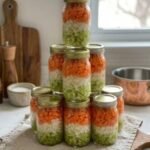
The colorful layers of green celery, white onion, and orange carrots also make these jars look beautiful. They are perfect for organized meal preparation and can make your refrigerator look surprisingly inviting.
Most importantly, this recipe uses simple ingredients that are easy to find.
Ingredients
For approximately 4–5 pint-size jars, you will need:
- 5 large carrots
- 5 celery stalks
- 3 medium yellow onions
- 1 tablespoon fresh parsley, optional
- ½ teaspoon black pepper, optional
- ½ teaspoon dried thyme, optional
- 1 tablespoon olive oil, for cooking later
You can increase or decrease the quantities depending on how many jars you want to prepare.
Choosing the Vegetables
Fresh vegetables will give you the best flavor and texture. Choose firm carrots with smooth skin and fresh-looking celery stalks. The onions should be firm and free from soft spots.
You can also customize the vegetable mixture. Bell peppers, leeks, zucchini, mushrooms, or other vegetables can be added depending on how you plan to use the jars.
For the beautiful layered appearance shown in the photo, however, carrots, onions, and celery create the most attractive combination.
Step 1: Wash and Prepare the Vegetables
Start by washing all of the vegetables thoroughly under cool running water.
Peel the carrots and cut off the ends. Dice the carrots into small pieces. Try to keep the pieces similar in size so they cook evenly.
Trim the celery stalks and remove any tough or damaged portions. Cut the celery into small pieces.
Peel the onions and finely dice them. Avoid making the onion pieces too large because smaller pieces blend nicely into soups and cook quickly.
Once everything has been chopped, keep each vegetable separate for layering.
Step 2: Prepare the Jars
Wash your mason jars and lids thoroughly and allow them to dry completely.
Because these are fresh meal-prep vegetables, not shelf-stable canned food, the jars should be stored in the refrigerator or freezer. Simply putting raw vegetables into sealed jars does not make them safe for room-temperature storage.
Choose jars that are large enough to hold the vegetables without packing them too tightly.
Step 3: Create the Beautiful Layers
Now comes the fun part.
Start by adding chopped celery to the bottom of each jar. Add enough to create an even green layer.
Next, add the diced onion. Gently level it to create a clean white layer.
Finally, add the chopped carrots to the top. The bright orange color creates a beautiful contrast against the onion and celery.
Don’t press the vegetables down too firmly. Leave some room at the top of the jar.
You can make the layers equal in size or adjust them according to your preferred ratio. If you enjoy sweeter vegetables, use more carrots. For a stronger savory flavor, add extra onion.
Step 4: Add Optional Herbs
If you plan to use the vegetables primarily for soup, you can add a small amount of dried thyme or fresh parsley.
Italian seasoning can also work well if you intend to use the vegetables for pasta sauce or an Italian-style soup.
However, keeping the vegetables plain is often the most versatile option because you can season them differently each time you cook.
Step 5: Store the Jars
Place the lids securely on the jars and refrigerate them.
For best quality, use fresh chopped vegetables within a few days rather than treating them as long-term canned food. If you want to keep the vegetables longer, freeze them in appropriate freezer-safe containers.
If using glass jars for freezing, use jars specifically intended for freezer storage and follow the manufacturer’s instructions for headspace. Do not freeze completely full jars, because expanding food can cause glass to crack.
Labeling the jars with the preparation date is also a useful habit.
How to Turn the Jars Into Soup
The easiest way to use your prepared vegetables is to sauté them before adding your soup ingredients.
Heat about 1 tablespoon of olive oil in a large soup pot over medium heat.
Add approximately 2 cups of the prepared carrots, celery, and onion mixture.
Cook for 6–8 minutes, stirring occasionally. The onion should become soft and fragrant, while the carrots and celery begin to soften.
At this point, you can add your favorite ingredients.
For a simple vegetable soup, add vegetable broth, diced tomatoes, potatoes, beans, herbs, salt, and pepper.
For chicken soup, add chicken broth, shredded cooked chicken, noodles, and additional seasonings.
For a hearty beef soup, add browned ground beef or cooked beef, broth, potatoes, and tomatoes.
Easy Homemade Vegetable Soup
Here is a simple soup you can make using one of your prepared jars.
Ingredients
- 2 cups prepared vegetables
- 1 tablespoon olive oil
- 4 cups vegetable or chicken broth
- 1 cup diced tomatoes
- 1 cup cooked beans
- 1 small potato, diced
- ½ cup small pasta
- 1 teaspoon Italian seasoning
- Salt to taste
- Black pepper to taste
- Fresh parsley for garnish
Instructions
Heat olive oil in a large pot over medium heat.
Add the prepared carrots, celery, and onion. Cook for about 6–8 minutes, stirring occasionally.
Add the broth, diced tomatoes, and potato. Stir well and bring the soup to a gentle boil.
Reduce the heat and simmer until the potatoes are almost tender.
Add the beans and pasta. Continue cooking until the pasta is tender and all of the vegetables are cooked through.
Season with Italian seasoning, salt, and black pepper.
Taste the soup and adjust the seasoning if necessary.
Remove the pot from the heat and garnish with fresh parsley.
Serve hot with crusty bread or homemade garlic toast.
Helpful Meal-Prep Tips
Cut vegetables evenly: Small, uniform pieces cook more consistently and make your soup easier to eat.
Keep vegetables dry: Excess moisture can make fresh vegetables deteriorate more quickly in the refrigerator.
Don’t overpack the jars: Loose layers make it easier to remove the vegetables when you’re ready to cook.
Prepare several jars at once: Since the chopping is the most time-consuming part, preparing multiple jars can save you significant time throughout the week.
Label everything: Write the preparation date on each jar so you know which ones should be used first.
Season when cooking: Keeping the vegetables unseasoned gives you more flexibility. One jar can become Italian soup while another can be used for chicken noodle soup.
Ways to Customize the Recipe
These vegetable jars are extremely versatile.
For a Mediterranean-inspired soup, add diced bell peppers and herbs when cooking. For a hearty winter stew, add potatoes and mushrooms.
If you enjoy spicy food, add jalapeño or crushed red pepper when preparing the final dish.
You can also add garlic when cooking rather than storing it with the fresh vegetables. Fresh garlic can be particularly strong, so adding it at the beginning of cooking gives you better control over the flavor.
For a richer soup, sauté the vegetables in butter instead of olive oil.
Can You Freeze the Vegetables?
Yes, freezing is an excellent option if you want to prepare the vegetables well in advance.
For the best quality, portion the chopped vegetables into freezer-safe bags or containers. Remove excess air where practical, label the containers with the date, and freeze.
When you’re ready to make soup, you can generally add the frozen vegetables directly to the pot. They may need a few extra minutes of cooking compared with fresh vegetables.
Freezing is particularly convenient when you prepare a large batch of vegetables and don’t expect to use everything within a few days.
Final Thoughts
These Make-Ahead Vegetable Soup Jars are a simple and practical way to make homemade cooking easier. The colorful combination of carrots, celery, and onions creates a classic base for soups and many other comforting meals.
Preparing the vegetables ahead of time means less chopping, less cleanup, and more time to enjoy your meal. You can keep the mixture simple and use it in different recipes throughout the week, or customize each batch with additional vegetables and herbs.
The beautiful layers also make these jars look special, but the real benefit is convenience. Once the vegetables are prepared, turning them into a warm homemade soup takes only a few simple steps.
Keep the jars properly refrigerated for short-term use or freeze the prepared vegetables for longer storage. With this easy meal-prep idea in your kitchen, a delicious homemade soup can be just minutes away from getting started.