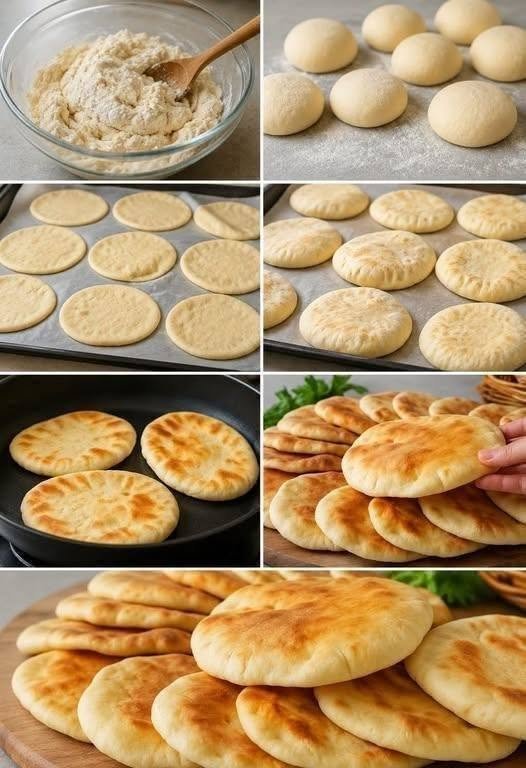
I’ll provide a complete fresh flatbread recipe with detailed explanations, ingredients, techniques, variations, storage tips, and serving ideas.
Fresh homemade flatbread is one of the oldest and most loved types of bread around the world. It is simple, comforting, and incredibly versatile. Unlike many modern breads that require complicated equipment or long preparation times, flatbread can be made with basic ingredients found in almost every kitchen: flour, water, salt, oil, and a little patience.
This recipe creates soft, warm, and slightly chewy flatbreads with a beautiful golden surface. They are perfect for serving with curries, grilled meats, vegetables, dips, soups, or even as a wrap for sandwiches. Fresh flatbread straight from the pan has a wonderful aroma and texture that store-bought versions often cannot match.
The recipe below explains every step in detail, including how to prepare the dough, how to cook the bread properly, common mistakes to avoid, and different ways to enjoy your homemade flatbread.
Ingredients
Main Ingredients
1. All-purpose flour – 4 cups (about 500 grams)
All-purpose flour works very well for soft flatbread because it creates a balanced texture. It provides enough gluten development for flexibility while keeping the bread tender.
You can also replace part of the all-purpose flour with whole wheat flour for a healthier and more rustic version.
2. Warm water – 1½ cups (approximately 350 ml)
Water brings the dough together and activates gluten in the flour. Use warm water, not hot water. Water that is too hot can affect the texture of the dough.
3. Salt – 2 teaspoons
Salt enhances the natural flavor of the bread and helps strengthen the dough structure.
4. Olive oil or vegetable oil – 3 tablespoons
Oil makes the flatbread softer and easier to roll. It also adds a pleasant flavor and prevents the bread from becoming dry.
5. Sugar or honey – 1 teaspoon (optional)
A small amount of sugar helps improve browning and adds a very slight sweetness. It is optional but recommended.
6. Baking powder – 1 teaspoon (optional)
Adding baking powder creates a slightly lighter and softer flatbread.
Equipment Needed
You do not need special equipment to make flatbread. Basic kitchen tools are enough.
- Large mixing bowl
- Measuring cups and spoons
- Rolling pin
- Clean kitchen towel
- Flat frying pan, skillet, or griddle
- Spatula
- Plate for serving
A cast iron skillet works especially well because it holds heat evenly and creates beautiful golden spots.
Step 1: Prepare the Dough
Start by placing the flour in a large mixing bowl.
Add salt, sugar, and baking powder if you are using them. Mix the dry ingredients well so the flavors are evenly distributed.
Make a small hole in the center of the flour mixture. Slowly pour in the warm water while mixing with your hand or a wooden spoon.
Add the oil and continue mixing until the dough begins to form.
At first, the dough may look rough and sticky. This is normal. The flour needs time to absorb the water.
Step 2: Knead the Dough
Transfer the dough onto a lightly floured surface.
Knead the dough for about 8–10 minutes.
Proper kneading is important because it develops gluten, which gives the flatbread its soft and flexible texture.
While kneading:
- Push the dough forward with the palm of your hand.
- Fold it back toward yourself.
- Rotate the dough.
- Repeat the process.
The finished dough should feel:
- Smooth
- Soft
- Elastic
- Slightly springy
If the dough feels too dry, add a teaspoon of water at a time.
If it feels extremely sticky, add a small amount of flour.
Avoid adding too much flour because it can make the flatbread hard.
Step 3: Rest the Dough
Place the dough in a lightly oiled bowl.
Cover it with a clean kitchen towel or plastic wrap.
Allow it to rest for at least 30 minutes.
Resting is a very important step. During this time, the gluten relaxes, making the dough easier to roll. The flatbread will also become softer after cooking.
For an even better texture, you can rest the dough for 1–2 hours in the refrigerator and bring it back to room temperature before cooking.
Step 4: Divide the Dough
After resting, gently press the air out of the dough.
Divide it into equal portions.
For medium-sized flatbreads:
- Divide into 8 pieces.
For larger wraps:
- Divide into 6 pieces.
Roll each piece into a smooth ball.
Cover the dough balls with a towel while working with one piece at a time. This prevents them from drying out.
Step 5: Roll the Flatbread
Lightly dust your working surface with flour.
Take one dough ball and flatten it with your fingers.
Using a rolling pin, roll it into a circle about 6–8 inches wide.
Try to keep the thickness even.
The flatbread should not be extremely thin like a tortilla and should not be thick like naan. A medium thickness gives the best soft and chewy texture.
If the dough keeps shrinking while rolling, allow it to rest for another 5–10 minutes.
Step 6: Cook the Flatbread
Heat a dry skillet or frying pan over medium-high heat.
The pan should be hot before adding the dough.
Place one rolled flatbread onto the hot pan.
Cook for about 30–60 seconds until bubbles begin to appear.
Flip the bread and cook the other side.
You should see golden brown spots forming.
Flip again if needed until the flatbread is fully cooked.
Do not cook on very low heat because the bread may become dry.
Do not use extremely high heat because the outside may burn before the inside cooks.
Step 7: Add Finishing Touches
When the flatbread is cooked, remove it from the pan.
Brush it lightly with:
- Melted butter
- Olive oil
- Garlic butter
- Herb-infused oil
Stack cooked flatbreads on a plate and cover them with a clean towel. This keeps them warm and soft.
Tips for Perfect Flatbread
Use the Right Dough Consistency
The dough should be soft but not wet. A slightly softer dough usually creates a softer bread.
Do Not Skip Resting
Resting allows the dough to relax and improves the final texture.
Keep Cooked Bread Covered
Exposure to air can dry flatbread quickly. Covering it keeps the moisture inside.
Cook on a Hot Surface
A properly heated pan creates better texture and attractive brown spots.
Avoid Too Much Flour
Excess flour during rolling can make the bread tough.
Flatbread Variations
Whole Wheat Flatbread
Replace half or all of the all-purpose flour with whole wheat flour.
Whole wheat flatbread has:
- More fiber
- A deeper flavor
- A slightly denser texture
Add a little extra water because whole wheat flour absorbs more liquid.
Garlic Herb Flatbread
Add:
- 2 minced garlic cloves
- 1 tablespoon chopped parsley
- 1 teaspoon dried oregano
Mix into the dough or brush onto the cooked bread.
This version is excellent with soups and grilled foods.
Yogurt Flatbread
Replace part of the water with plain yogurt.
Yogurt creates a softer texture and adds a mild tangy flavor.
Spiced Flatbread
Add spices such as:
- Cumin seeds
- Black pepper
- Chili flakes
- Coriander seeds
This creates a flavorful bread that can be eaten on its own.
Serving Suggestions
Fresh flatbread can be served in many ways.
With Curries
Flatbread is perfect with:
- Chicken curry
- Vegetable curry
- Lentil dishes
- Bean stews
The bread absorbs sauces beautifully.
As Wraps
Use flatbread as a wrap with:
- Grilled chicken
- Fresh vegetables
- Salad
- Cheese
- Hummus
With Dips
Serve warm flatbread with:
- Hummus
- Yogurt sauce
- Garlic dip
- Salsa
Breakfast Ideas
Flatbread can be enjoyed with:
- Eggs
- Cheese
- Butter
- Jam
- Honey
Storage Instructions
Room Temperature
Fresh flatbread can be stored in an airtight container or sealed bag for up to 2 days.
Refrigerator
Store in the refrigerator for up to 5 days.
Warm before serving to restore softness.
Freezer
Flatbread freezes very well.
To freeze:
- Allow cooked bread to cool completely.
- Place parchment paper between pieces.
- Store in a freezer bag.
- Freeze for up to 3 months.
To use frozen flatbread, warm it directly in a pan or microwave.
Common Problems and Solutions
Flatbread Is Hard
Possible reasons:
- Too much flour was added.
- Dough was not rested.
- Bread was overcooked.
Solution:
Use a softer dough and cook for less time.
Flatbread Does Not Puff
Possible reasons:
- Pan was not hot enough.
- Dough was rolled unevenly.
- Dough was too dry.
Solution:
Increase pan temperature and keep dough soft.
Dough Is Too Sticky
Solution:
Add flour slowly, one tablespoon at a time.
Avoid adding large amounts of flour.
Nutrition Information (Approximate Per Flatbread)
For one medium flatbread:
- Calories: 180–220
- Carbohydrates: 30–35 grams
- Protein: 5–6 grams
- Fat: 4–6 grams
Nutrition values vary depending on flour type and added oil.
Final Thoughts
Making fresh flatbread at home is simple, affordable, and rewarding. With only a few basic ingredients, you can create soft, flavorful bread that is far better than many packaged options.
The key secrets are using a soft dough, allowing enough resting time, cooking on a properly heated pan, and keeping the finished bread covered. Once you master this basic recipe, you can experiment with whole grains, herbs, spices, and different fillings.
Fresh homemade flatbread is more than just a side dish—it is a warm, versatile food that brings people together and can be enjoyed with almost any meal.
I can also provide a .
