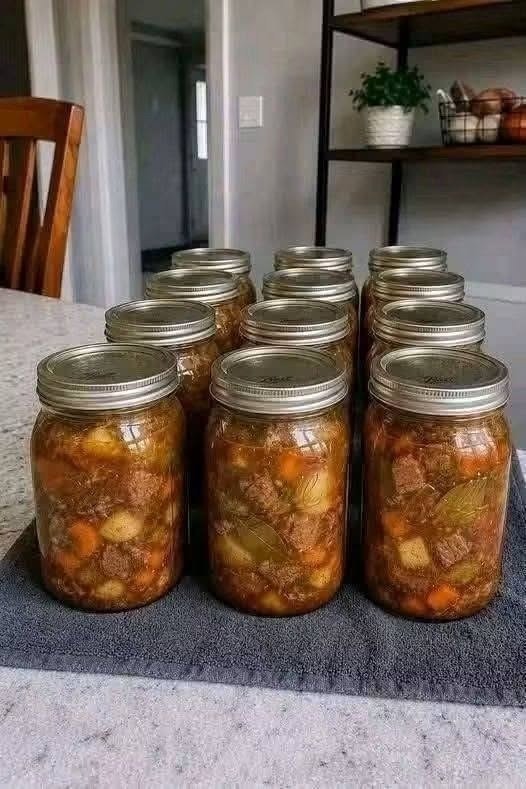

There is nothing quite as comforting as a warm bowl of homemade beef stew. Tender pieces of beef, hearty potatoes, sweet carrots, onions, and flavorful broth come together to create a meal that tastes like it has been simmering all day. This Hearty Beef Vegetable Stew is rich, satisfying, and perfect for cozy family dinners.
It is also a wonderful make-ahead meal. Prepare a large batch, enjoy some for dinner, and freeze the remaining portions for another day. If you are interested in preserving the soup in jars, follow a tested pressure-canning method rather than simply sealing cooked stew in jars. Low-acid foods such as beef and vegetables require pressure canning for safety.
Why You’ll Love This Recipe
This recipe is everything you want in a classic comfort-food dinner. The beef becomes tender and flavorful, while the vegetables soak up the savory broth. Carrots add natural sweetness, potatoes make the dish filling, and onions and garlic build a delicious base.
Another great thing about this recipe is its flexibility. You can adjust the vegetables according to what you have available. Celery, green beans, peas, or tomatoes can all be wonderful additions when preparing the stew for immediate eating.
The key is to keep the broth relatively thin if you plan to preserve it. For home canning, flour, cornstarch, cream, rice, pasta, and other thickeners should not be added before processing. NCHFP specifically recommends not thickening home-canned soups because thickness can affect heat penetration.
Ingredients
For approximately 8–10 servings, you will need:
- 3 pounds beef chuck roast, cut into bite-size cubes
- 2 tablespoons vegetable oil
- 1 large yellow onion, diced
- 3 cloves garlic, minced
- 5 medium carrots, peeled and sliced
- 4 medium potatoes, peeled and cut into chunks
- 2 celery stalks, sliced
- 6 cups beef broth or water
- 2 tablespoons tomato paste, for a richer flavor when serving fresh
- 2 bay leaves
- 1 teaspoon dried thyme
- 1 teaspoon dried parsley
- 1 teaspoon salt, or to taste
- ½ teaspoon black pepper
- ½ teaspoon paprika
- 1 cup diced tomatoes, optional
- 1 cup green beans or peas, optional
For a stew that will be eaten immediately, you may also use a small amount of flour or cornstarch to thicken the broth. Do not use these thickeners if you intend to pressure-can the mixture.
Choosing the Best Beef
Beef chuck is one of the best choices for stew because it contains enough connective tissue and marbling to become tender during slow cooking. As it simmers, the connective tissue breaks down and gives the broth a rich, satisfying flavor.
Cut the beef into fairly even pieces so everything cooks at approximately the same rate. Trim away large pieces of excess fat, but do not remove every bit of marbling because some fat contributes flavor.
How to Make Beef Vegetable Stew
1. Prepare the Beef
Pat the beef cubes dry with paper towels. Season lightly with salt, pepper, and paprika.
Heat the oil in a large heavy-bottomed pot over medium-high heat. Add the beef in batches rather than overcrowding the pan. Brown the pieces on several sides.
You do not need to cook the beef completely at this stage. The goal is simply to develop a beautiful browned exterior and extra flavor.
Remove the browned beef and set it aside.
2. Cook the Aromatics
Add the diced onion to the same pot. Cook for about 3–4 minutes until it begins to soften.
Add the minced garlic and cook for another 30–60 seconds. Be careful not to burn the garlic.
If you are making this as a fresh dinner, stir in the tomato paste and cook for another minute. This helps deepen the flavor.
3. Add the Vegetables
Return the beef to the pot. Add the carrots, potatoes, celery, bay leaves, thyme, parsley, and any optional vegetables.
Pour in the beef broth. The ingredients should be surrounded by liquid, but the mixture should not be excessively thick.
Bring everything to a gentle boil.
4. Simmer Slowly
Reduce the heat to low and cover the pot.
Allow the stew to simmer gently for approximately 1½ to 2 hours, or until the beef is fork-tender and the vegetables are cooked through.
Stir occasionally and check the liquid level. If necessary, add a little more hot broth or water.
The longer, slower cooking time allows the beef to become tender and gives the broth a deep, savory flavor.
5. Adjust the Seasoning
Once the beef is tender, taste the broth. Add additional salt and pepper if needed.
Remove the bay leaves before serving.
If you are serving the stew immediately, you can thicken the broth with a small slurry of cornstarch and cold water. Stir it into the hot stew and simmer for a few minutes until thickened.
For canning purposes, do not add a thickener.
Safe Pressure-Canning Alternative
If your goal is to make jars like the ones shown in the photo for longer-term storage, it is important not to simply cook this thick stew and seal it in jars.
USDA/NCHFP explains that there is no scientifically tested home-canning recipe for meat stew because a thick stew can heat unevenly inside the jar. Instead, their tested approach is a vegetable-and-meat soup.
For the tested soup method, meat is cooked until tender, vegetables are prepared separately, and the ingredients are combined with enough broth, water, or other appropriate liquid to cover them. The mixture is boiled for 5 minutes, jars are filled with solids halfway, and hot liquid is added while leaving 1 inch of headspace. No flour, cornstarch, pasta, rice, cream, or other thickening agents should be added.
The jars must then be processed in a proper pressure canner using the tested processing time and pressure appropriate for the recipe, jar size, canner type, and elevation. A regular pressure cooker is not a substitute for a pressure canner.
For example, the NCHFP soup guidance lists 60 minutes for pints and 75 minutes for quarts at the specified baseline pressures, with pressure adjustments required according to elevation and the type of pressure canner being used. Always follow the current tested instructions for the exact product you are canning.
Serving Suggestions
Freshly cooked beef vegetable stew is delicious with crusty bread, homemade biscuits, dinner rolls, or a simple green salad.
For an especially comforting meal, spoon the stew into bowls while it is piping hot and serve with warm bread for dipping into the rich broth.
You can also serve it over mashed potatoes for an extra hearty dinner.
Storage
Allow leftover stew to cool promptly and refrigerate it in covered containers. Use refrigerated leftovers within a few days, or freeze them for longer storage.
Frozen stew can be thawed safely in the refrigerator and reheated thoroughly on the stovetop or in the microwave.
If using home-canned jars, remember that appearance, smell, and taste cannot reliably tell you whether an improperly canned low-acid food is safe. Improperly processed meat and vegetable products can present a serious botulism risk.
Final Thoughts
This Hearty Beef Vegetable Stew is the kind of recipe that makes an ordinary evening feel special. Tender beef, potatoes, carrots, onions, and aromatic herbs create a comforting meal that the whole family can enjoy.
It is perfect for chilly days, Sunday dinners, meal preparation, or anytime you are craving something warm and homemade. The recipe is easy to customize when cooking for dinner, but if you want the convenience of shelf-stable jars like those shown in the photo, use a tested pressure-canned vegetable-and-meat soup method rather than improvising a canning recipe.
With its rich flavor, tender beef, and hearty vegetables, this classic recipe is sure to become a favorite in your kitchen.