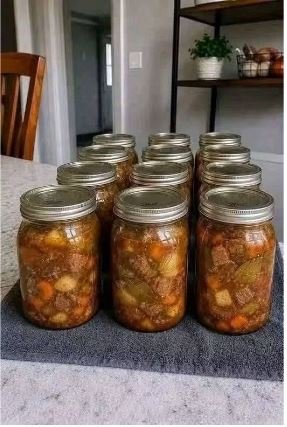

This Hearty Beef Stew is the perfect homemade comfort food for chilly evenings, family dinners, meal prep, or stocking the freezer. Tender pieces of beef are slowly cooked with potatoes, carrots, onions, celery, garlic, and savory herbs until everything becomes rich, flavorful, and incredibly comforting. The finished stew has a deliciously thick broth that coats every bite of meat and vegetables.
The jars in the photo are a great inspiration for making a large batch, but if you plan to preserve beef stew in jars for shelf storage, use a tested pressure-canning recipe and follow current canning guidelines. Beef and other low-acid foods should not be water-bath canned. The recipe below is written primarily as a delicious fresh stew that can also be refrigerated or frozen.
Ingredients
For the Beef Stew
- 3 pounds beef chuck roast, cut into 1-inch cubes
- 3 tablespoons vegetable oil
- 1 large yellow onion, diced
- 4 cloves garlic, minced
- 5 medium carrots, peeled and sliced
- 4 medium potatoes, peeled and cut into chunks
- 3 celery stalks, sliced
- 4 cups beef broth
- 1 cup tomato sauce or crushed tomatoes
- 2 tablespoons tomato paste
- 2 tablespoons Worcestershire sauce
- 1 teaspoon dried thyme
- 1 teaspoon dried rosemary
- 2 bay leaves
- 1 teaspoon smoked paprika
- 1 teaspoon salt, plus more to taste
- ½ teaspoon black pepper
- 2 tablespoons all-purpose flour
- 2 tablespoons chopped fresh parsley
Choosing the Beef
For the best stew, choose a cut of beef that becomes tender during slow cooking. Beef chuck is an excellent option because it contains enough marbling and connective tissue to become wonderfully soft and flavorful.
Cut the beef into similar-sized pieces so everything cooks evenly. Pat the beef dry with paper towels before seasoning. Removing excess moisture helps the meat brown beautifully instead of simply steaming in the pot.
Prepare the Beef
Season the beef cubes with salt, black pepper, and smoked paprika. Sprinkle the flour over the beef and toss until the pieces are lightly coated.
Heat the vegetable oil in a large heavy-bottomed pot or Dutch oven over medium-high heat. Add the beef in batches, making sure not to overcrowd the pot. Brown the pieces on several sides for about 2–3 minutes per side.
You do not need to cook the beef completely at this stage. The goal is to develop a deep brown crust because those browned bits will add incredible flavor to the stew.
Transfer the browned beef to a plate and repeat with the remaining pieces.
Cook the Aromatics
Reduce the heat to medium and add the diced onion to the same pot. Cook for approximately 4–5 minutes, stirring occasionally, until the onion begins to soften.
Add the minced garlic and cook for another 30–60 seconds. Be careful not to burn the garlic.
Add the tomato paste and stir it into the onions and garlic. Cooking the tomato paste for a minute or two helps develop a richer, deeper flavor.
Build the Stew
Return the browned beef to the pot. Pour in the beef broth and tomato sauce, scraping the bottom of the pot with a wooden spoon to release all those flavorful browned bits.
Add the Worcestershire sauce, thyme, rosemary, bay leaves, and remaining black pepper.
Bring the mixture to a gentle boil. Once it begins bubbling, reduce the heat to low and cover the pot.
Allow the beef to simmer gently for about 1½ hours. Stir occasionally and make sure the stew remains at a gentle simmer rather than a rapid boil.
Add the Vegetables
After the beef has started becoming tender, add the carrots, celery, and potatoes.
Stir everything together and continue cooking for another 30–45 minutes, or until the vegetables are tender and the beef can easily be pierced with a fork.
Adding the vegetables later prevents them from becoming overly soft while the beef develops its tenderness.
If the stew becomes thicker than you prefer, add a little additional beef broth. If you prefer a thicker consistency, remove the lid during the final 15–20 minutes of cooking and allow some of the liquid to reduce.
Taste and Finish
Remove the bay leaves before serving. Taste the stew and adjust the salt and pepper according to your preference.
For a fresh finishing touch, sprinkle chopped parsley over the top.
The finished stew should have tender chunks of beef, soft but intact vegetables, and a rich, savory broth. Letting the stew rest for about 10 minutes before serving allows the flavors to settle and the broth to thicken slightly.
Serving Suggestions
This beef stew is hearty enough to be served as a complete meal, but it becomes even better with a few simple sides.
Serve it with warm crusty bread for dipping into the rich gravy. Homemade biscuits, dinner rolls, cornbread, or garlic bread also pair beautifully with the stew.
For a lighter option, serve it alongside a simple green salad or steamed green beans.
You can also spoon the stew over mashed potatoes for an extra-comforting dinner.
Make-Ahead Instructions
Beef stew is one of those meals that often tastes even better the next day. As the stew rests, the beef and vegetables continue absorbing the savory flavors from the broth.
To make it ahead, allow the finished stew to cool appropriately, then refrigerate it in covered containers. Reheat it thoroughly on the stovetop or in the microwave before serving.
If the stew becomes very thick after chilling, stir in a small amount of beef broth while reheating.
Freezing the Stew
This recipe is also excellent for freezer meal preparation.
Allow the cooked stew to cool, then portion it into freezer-safe containers, leaving appropriate space for expansion. Label each container with the name and date before freezing.
For best quality, use frozen stew within a few months. Thaw it safely in the refrigerator before reheating, then heat until steaming hot throughout.
Important Canning Note
If you want to make a large batch like the jars shown in the photo and store it at room temperature, do not simply pour cooked stew into jars and seal them. Beef stew is a low-acid food and requires proper pressure canning using a scientifically tested recipe, processing time, pressure, jar size, and altitude adjustment.
Also, do not use a traditional boiling-water bath for beef stew. Safe home canning depends on achieving the correct temperature throughout the food to control dangerous microorganisms.
For a shelf-stable version, follow a current tested recipe from a reputable food-preservation authority such as the USDA or your local extension service rather than adapting this fresh-stew recipe for canning.
Final Thoughts
This hearty beef stew is the kind of classic meal that makes the kitchen smell amazing and brings everyone to the table. The combination of browned beef, tender potatoes, sweet carrots, celery, onions, garlic, herbs, and rich beef broth creates a deeply satisfying homemade dinner.
Whether you prepare a smaller pot for a family meal, make a large batch for freezer meals, or use a properly tested pressure-canning method for long-term preservation, this classic beef stew is a wonderful recipe to keep in your collection.
Prep Time: 25 minutes
Cook Time: 2–2½ hours
Total Time: About 3 hours
Servings: 8–10
Course: Main Course
Cuisine: American
Keyword: Hearty Beef Stew, Homemade Beef Stew, Comfort Food, Beef and Vegetable Stew
Would you like the next version to be more traditional, slow-cooker style, or canning-focused?
ki 1000 english words main recipe bna kr do myna website pr post krna ha
Homemade Hearty Beef Stew
There is nothing quite like a warm bowl of homemade beef stew on a cool evening. This Hearty Beef Stew is packed with tender chunks of beef, potatoes, carrots, onions, celery, and flavorful herbs simmered together in a rich, savory broth. The beef slowly cooks until it becomes wonderfully tender, while the vegetables absorb all of those delicious flavors.
This is the kind of old-fashioned comfort food that makes the whole kitchen smell amazing. It is perfect for a cozy family dinner, Sunday meal, meal prep, or making a large batch to enjoy throughout the week.
Ingredients
For the Beef Stew
- 3 pounds beef chuck roast, cut into 1-inch cubes
- 3 tablespoons vegetable oil
- 1 large yellow onion, chopped
- 4 cloves garlic, minced
- 5 medium carrots, peeled and sliced
- 4 medium potatoes, peeled and cut into chunks
- 3 celery stalks, sliced
- 4 cups beef broth
- 1 cup tomato sauce
- 2 tablespoons tomato paste
- 2 tablespoons Worcestershire sauce
- 2 tablespoons all-purpose flour
- 1 teaspoon dried thyme
- 1 teaspoon dried rosemary
- 1 teaspoon smoked paprika
- 2 bay leaves
- 1½ teaspoons salt, or to taste
- ½ teaspoon black pepper
- 2 tablespoons fresh parsley, chopped
Why You Will Love This Recipe
This beef stew is simple, hearty, and incredibly satisfying. The beef is first browned to create a delicious crust and then slowly simmered in a flavorful broth. Browning the meat is an important step because it gives the stew a deeper and richer flavor.
The vegetables add natural sweetness, while garlic, thyme, rosemary, Worcestershire sauce, and tomato paste give the broth a wonderfully savory taste.
Another great thing about this recipe is that it is very flexible. You can add mushrooms, peas, green beans, or other vegetables you enjoy. You can also make the stew thicker or thinner depending on your preference.
How to Make Homemade Beef Stew
Step 1: Prepare the Beef
Start by cutting the beef chuck roast into bite-sized cubes. Try to keep the pieces approximately the same size so they cook evenly.
Pat the beef dry with paper towels. This helps the meat brown properly.
Place the beef in a large bowl and season it with salt, black pepper, and smoked paprika. Sprinkle the flour over the beef and toss everything together until the pieces are lightly coated.
The flour will also help give the finished stew a slightly thicker and richer gravy.
Step 2: Brown the Beef
Heat the vegetable oil in a large heavy-bottomed pot or Dutch oven over medium-high heat.
Add the beef in batches. Avoid overcrowding the pot because too much meat at once can cause the beef to steam instead of brown.
Brown the beef for about 2–3 minutes on each side, until the pieces develop a deep golden-brown crust.
Transfer the browned beef to a plate and continue with the remaining beef.
Don’t worry if the beef is not completely cooked at this point. It will finish cooking slowly in the stew.
Step 3: Cook the Onion and Garlic
Reduce the heat to medium and add the chopped onion to the same pot.
Cook for about 4–5 minutes, stirring occasionally, until the onion becomes soft and translucent.
Add the minced garlic and cook for another 30–60 seconds.
Be careful not to burn the garlic because burnt garlic can make the entire stew taste bitter.
Step 4: Add the Tomato Paste
Add the tomato paste to the onions and garlic.
Stir continuously for about 1–2 minutes. Cooking the tomato paste briefly helps develop its flavor and gives the broth a beautiful rich color.
Next, slowly pour in the beef broth while scraping the bottom of the pot with a wooden spoon.
Those browned bits stuck to the bottom are full of flavor and will make your stew taste even better.
Step 5: Add the Beef and Seasonings
Return the browned beef to the pot.
Add the tomato sauce, Worcestershire sauce, dried thyme, dried rosemary, bay leaves, and remaining black pepper.
Stir everything together.
Bring the mixture to a gentle boil, then reduce the heat to low.
Cover the pot and allow the stew to simmer gently for about 1½ hours.
The slow cooking process allows the beef to become tender and gives the broth plenty of time to develop a rich flavor.
Step 6: Add the Vegetables
After the beef has been simmering, add the carrots, celery, and potatoes.
Stir everything together and cover the pot again.
Continue cooking for another 30–45 minutes, or until the potatoes and carrots are tender and the beef is soft enough to cut easily with a fork.
If the stew looks too thick while cooking, add a little more beef broth.
If you prefer a thicker stew, remove the lid during the final 15–20 minutes of cooking and let some of the liquid evaporate.
Step 7: Finish the Stew
Once the beef and vegetables are completely tender, remove the bay leaves.
Taste the broth and add more salt or black pepper if needed.
Turn off the heat and let the stew rest for about 10 minutes.
Finally, sprinkle freshly chopped parsley over the top.
The result should be a thick, flavorful stew filled with tender beef and hearty vegetables.
Tips for the Best Beef Stew
Use beef chuck: Beef chuck is one of the best cuts for stew because the slow cooking process turns it wonderfully tender.
Don’t skip browning: Browning the beef creates extra flavor and gives the finished stew a richer taste.
Don’t rush the cooking: Beef stew is best when cooked slowly. A gentle simmer allows the connective tissue in the beef to break down and become tender.
Cut vegetables evenly: Try to cut the potatoes and carrots into similar-sized pieces so they cook at approximately the same rate.
Let it rest: Giving the stew a few minutes to rest before serving allows the flavors to come together.
What to Serve With Beef Stew
This stew is hearty enough to be served on its own, but there are plenty of delicious sides that pair perfectly with it.
Serve it with warm crusty bread so you can soak up every drop of the rich gravy. Homemade biscuits, dinner rolls, cornbread, or garlic bread are also excellent choices.
For something lighter, serve the stew with a simple green salad or steamed vegetables.
Mashed potatoes are another wonderful option. Spoon the beef stew and its rich gravy over creamy mashed potatoes for an extra comforting meal.
Make-Ahead Instructions
Beef stew is an excellent make-ahead meal. In fact, many people find that the flavor becomes even better after sitting overnight.
Prepare the stew according to the recipe, allow it to cool appropriately, and store it covered in the refrigerator.
When you are ready to serve it, reheat it gently on the stovetop. Add a splash of beef broth if the stew has become too thick.
Freezing Instructions
This recipe is also great for freezer meal preparation.
Allow the cooked stew to cool, then divide it into freezer-safe containers. Leave a little room for expansion and seal the containers well.
Label each container with the date and place it in the freezer.
When you are ready to enjoy the stew, thaw it safely in the refrigerator and reheat it thoroughly before serving.
About Storing the Stew in Jars
The photo shows beef stew stored in jars, but if you are planning to make shelf-stable jars at home, do not simply cook the stew and seal it in jars.
Beef stew is a low-acid food, and safe home canning requires a tested process. USDA guidance explains that low-acid foods such as meat require pressure canning rather than a boiling-water bath.
There is also an important point for this particular recipe: a USDA canning guide notes that there are no scientifically tested home-canning recipes for meat stew as a thick mixture, because heat penetration can vary with the consistency.
For website readers who want to preserve this stew, it is safest to recommend using a current, scientifically tested home-canning recipe rather than adapting this fresh stew recipe for canning.
Final Thoughts
This Homemade Hearty Beef Stew is everything you want in a comfort-food dinner. The beef becomes tender and flavorful, the potatoes and carrots become perfectly soft, and the rich broth brings everything together.
It is an easy recipe to prepare when you want something warm, filling, and homemade. Whether you serve it with crusty bread on a cold evening or prepare a large batch for several family meals, this classic beef stew is sure to become a favorite.
Prep Time: 25 minutes
Cook Time: 2–2½ hours
Total Time: About 3 hours
Servings: 8–10
Course: Dinner
Cuisine: American
Keyword: Homemade Beef Stew, Hearty Beef Stew, Beef Stew Recipe, Comfort Food, Beef and Vegetable Stew