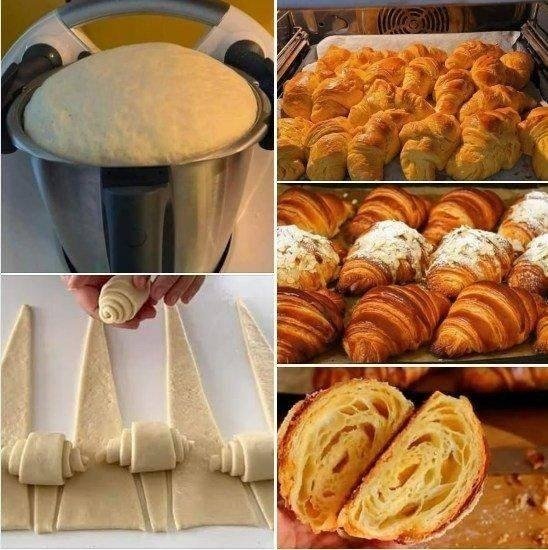

There is nothing quite like the smell of freshly baked Homemade French Croissants coming from the oven. Golden, flaky, buttery, and beautifully layered, croissants are one of those bakery-style treats that feel extra special when made from scratch. With their crisp exterior and soft, airy center, these homemade croissants are perfect for breakfast, brunch, holidays, or a relaxing weekend morning.
Although croissants require some patience because the dough needs time to rest and chill between folds, the process is absolutely worth it. The secret to those beautiful flaky layers is laminating the dough with butter and keeping everything cool while working. Once baked, the layers puff up into a delicate, golden pastry that looks impressive and tastes even better.
This recipe makes approximately 12–14 croissants, depending on the size you choose.
Why You’ll Love These Croissants
Homemade croissants have a richness and freshness that is difficult to compare with packaged pastries. The dough is lightly sweet, while the butter creates wonderfully crisp, flaky layers.
You can enjoy them plain, fill them with chocolate or almond paste, or serve them with jam, honey, butter, or cheese. They are also delicious when sliced in half and used for breakfast sandwiches.
The dough can be prepared ahead of time, making this recipe convenient when you want fresh croissants in the morning.
Ingredients
For the Dough
- 4 cups all-purpose flour
- ¼ cup granulated sugar
- 2 teaspoons instant yeast
- 1½ teaspoons salt
- 1¼ cups warm milk
- ¼ cup warm water
- 2 tablespoons unsalted butter, melted
For the Butter Layer
- 1 cup unsalted butter, cold
For the Egg Wash
- 1 large egg
- 1 tablespoon water
Step 1: Make the Dough
In a large mixing bowl, combine the flour, sugar, yeast, and salt.
Add the warm milk, warm water, and melted butter. Stir until the ingredients come together into a rough dough.
Transfer the dough to a lightly floured work surface and knead gently for approximately 5–8 minutes, until smooth.
You can also use a stand mixer fitted with a dough hook.
The dough should be soft and elastic but not excessively sticky.
Shape the dough into a rectangle, wrap it tightly in plastic wrap, and refrigerate it for at least 1–2 hours.
For the best results, you can refrigerate the dough overnight.
Step 2: Prepare the Butter
The butter layer is what creates the flaky croissant structure.
Place the cold butter between two sheets of parchment paper.
Using a rolling pin, gently pound and roll the butter into a flat rectangle approximately 8 x 6 inches.
The butter should be cold but flexible. It should have a similar firmness to the chilled dough.
If the butter becomes too soft, place it back in the refrigerator for several minutes.
Step 3: Enclose the Butter
Remove the chilled dough from the refrigerator and roll it into a rectangle approximately twice the size of the butter block.
Place the butter in the center of the dough.
Fold the dough over the butter, completely enclosing it. Pinch the edges together so the butter cannot escape during rolling.
At this point, you have a dough package ready for laminating.
Step 4: First Fold
Lightly flour your work surface and roll the dough into a long rectangle.
Try to keep the edges straight and avoid pressing too aggressively, which can cause the butter to break through the dough.
Once the dough is approximately three times as long as it is wide, fold it into thirds like a letter.
Wrap it in plastic wrap and refrigerate for approximately 30–45 minutes.
Keeping the dough cold is extremely important. If the butter becomes soft or starts melting, stop working and chill the dough before continuing.
Step 5: Repeat the Folding
Remove the chilled dough and place it on your work surface with the folded edge facing you.
Roll it into another long rectangle and fold it into thirds again.
Wrap and refrigerate for another 30–45 minutes.
For beautifully layered croissants, complete approximately three folds in total.
After the final fold, refrigerate the dough for at least another hour or overnight.
The repeated rolling and folding creates the thin layers of dough and butter that puff beautifully during baking.
Step 6: Roll and Cut the Croissants
Place the chilled dough on a lightly floured surface.
Roll it into a large rectangle approximately ¼ inch thick.
Using a sharp knife or pizza cutter, cut the dough into long triangles.
Each triangle should have a wide base and a pointed tip.
Make a small slit in the center of the wide end of each triangle.
Starting at the wide end, gently roll the dough toward the pointed tip.
Do not roll too tightly. The layers need room to expand during proofing and baking.
Place each shaped croissant onto a parchment-lined baking sheet with the pointed tip tucked underneath.
Curve the ends slightly toward each other if you want the traditional crescent shape.
Step 7: Let the Croissants Rise
Cover the shaped croissants loosely with plastic wrap or a clean kitchen towel.
Allow them to proof at room temperature for approximately 1½–2 hours.
The croissants should become noticeably puffy and light.
Do not place them in an extremely hot area because the butter can melt into the dough.
The dough should remain cool enough for the butter layers to stay intact.
Step 8: Prepare the Egg Wash
When the croissants are nearly finished proofing, preheat your oven to 400°F (200°C).
In a small bowl, whisk together one egg and one tablespoon of water.
Gently brush the egg wash over the tops of the croissants.
Try not to press down on the delicate dough while brushing.
The egg wash gives the croissants their beautiful shiny, golden-brown appearance.
Step 9: Bake
Place the baking sheet in the preheated oven.
Bake for approximately 15–20 minutes, or until the croissants are deeply golden brown and beautifully puffed.
You may reduce the oven temperature slightly after the first few minutes if your croissants are browning too quickly.
Avoid opening the oven repeatedly because maintaining steady heat helps the croissants rise properly.
Once baked, remove them from the oven and transfer them to a wire rack.
Allow them to cool for at least 10–15 minutes before serving.
Helpful Tips for Perfect Croissants
Keep the butter cold: This is one of the most important rules. Soft butter can disappear into the dough instead of creating distinct layers.
Don’t rush the chilling: Refrigeration between folds allows the butter and dough to firm up.
Use a sharp knife: A clean cut helps the dough separate properly and makes shaping easier.
Don’t overproof: Croissants should look puffy and airy but still hold their shape.
Don’t roll too tightly: Leave room for the layers to expand.
Use an egg wash: It creates that beautiful bakery-style golden finish.
Delicious Filling Ideas
Plain butter croissants are wonderful, but you can easily turn this recipe into different pastries.
For chocolate croissants, place a small piece of chocolate near the wide end before rolling.
For cheese croissants, add a thin slice of cheese before shaping.
For a sweet version, spread a little almond paste or chocolate hazelnut spread inside.
You can also serve baked croissants with strawberry jam, raspberry preserves, honey, or powdered sugar.
How to Store
Fresh croissants are best enjoyed on the day they are baked.
Store leftovers in an airtight container at room temperature for up to two days. Reheat them briefly in a warm oven to restore some of their crispness.
You can also freeze baked croissants. Allow them to cool completely, wrap them well, and freeze them in an airtight container.
To serve, thaw and warm them in the oven until crisp and heated through.
Final Thoughts
These Homemade Classic French Croissants are a wonderful baking project for anyone who loves buttery, flaky pastries. The process takes time, but each step is simple, and the final result is incredibly rewarding.
From the first fold to the final golden bake, watching the dough transform into beautiful layered croissants is part of the fun. Serve them warm with coffee, tea, jam, butter, or your favorite filling.
Whether you’re making them for a weekend breakfast, holiday brunch, or special family gathering, these croissants are sure to impress.
Golden, buttery, flaky, and fresh from the oven—once you make homemade croissants, you may never look at bakery pastries the same way again! 🥐✨